History
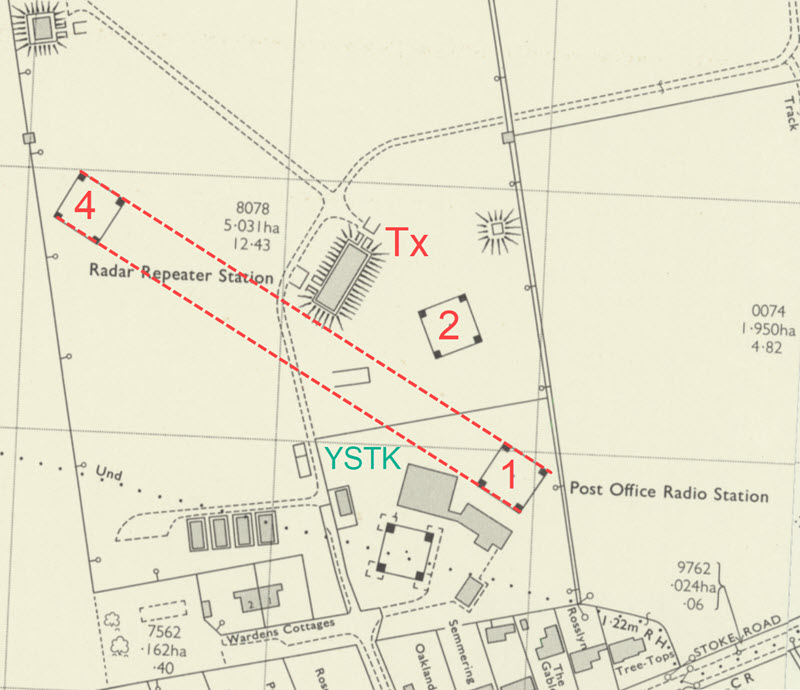
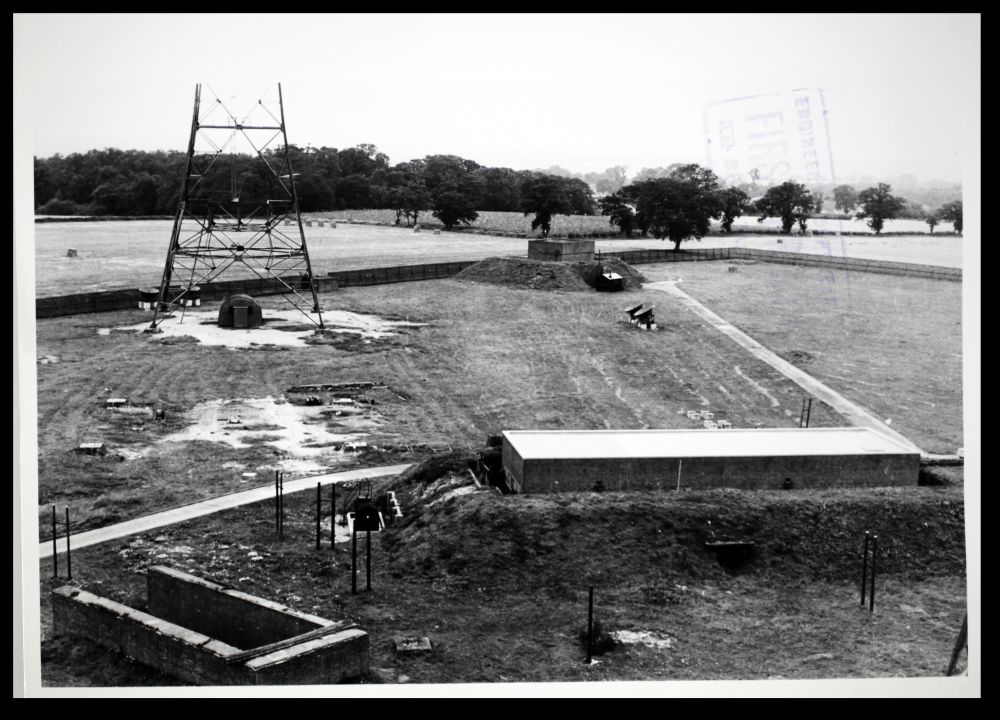
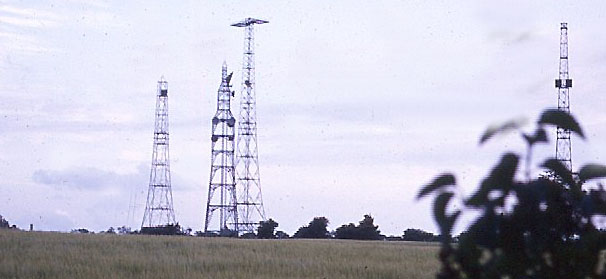
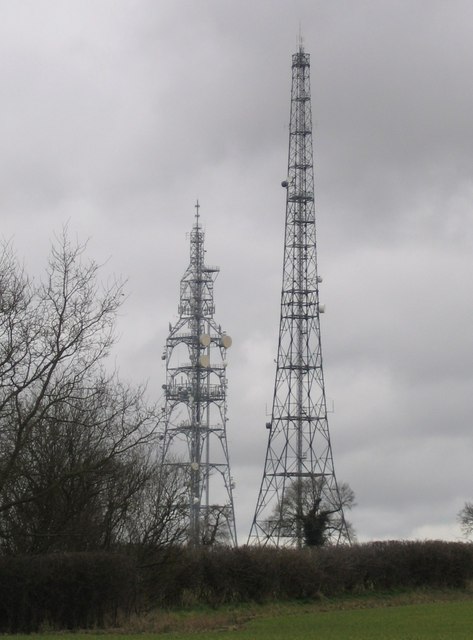
Stoke Holy Cross has an interesting history - from around 1939 the site was used for a Chain Home Radar station, with the then standard arrangement of four steel towers for transmission and four wooden towers for reception. In 1942 the original "Tower 2" was damaged and another built just to the north. "Tower 4" remains today and the 1960s Post Office structure was built near "Tower 1". This map based on the 1970 Ordnance Survey map may help with interpretation.
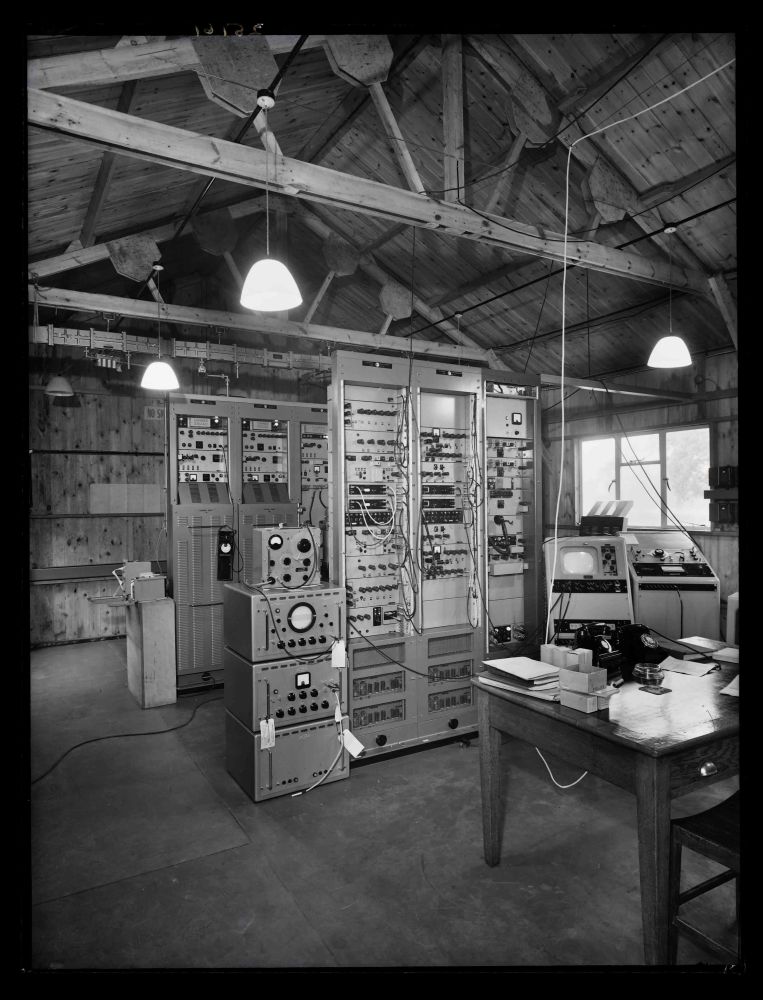
Post Office Radio Report 2011 ("Secret Limited Circulation" when written, but available from BT Archives) gives details of measurements of the field strength of the radar, operating on 26.36 MHz, and the second and third harmonics. This research was carried out in June 1950 to assess the potential for a Chain Home radar system to cause interference to television.
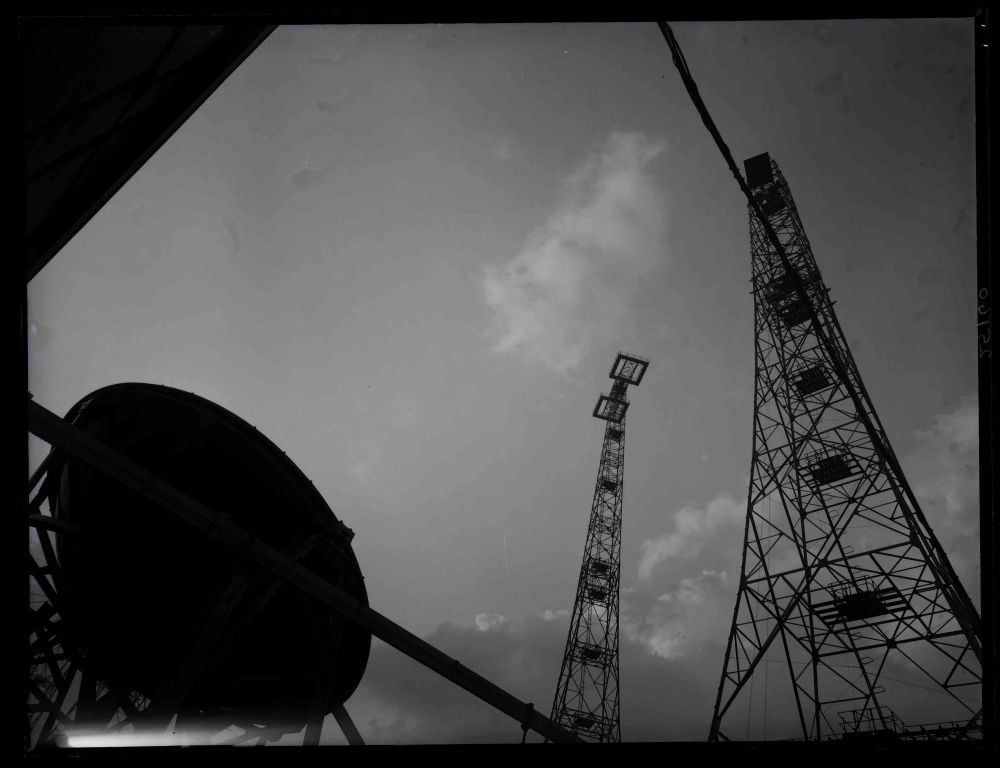
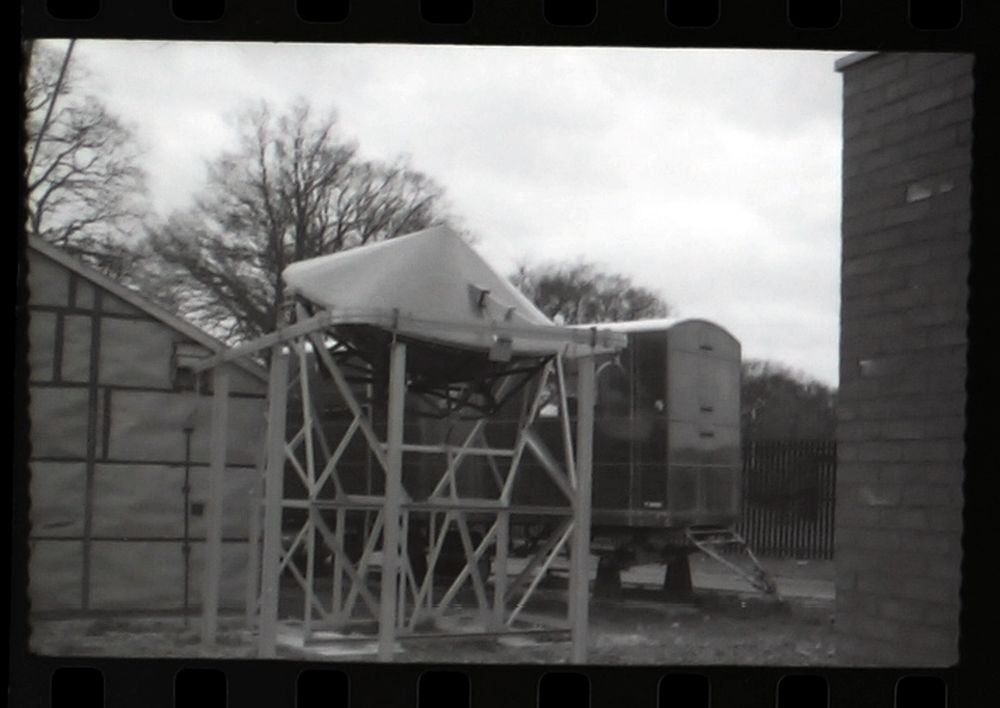
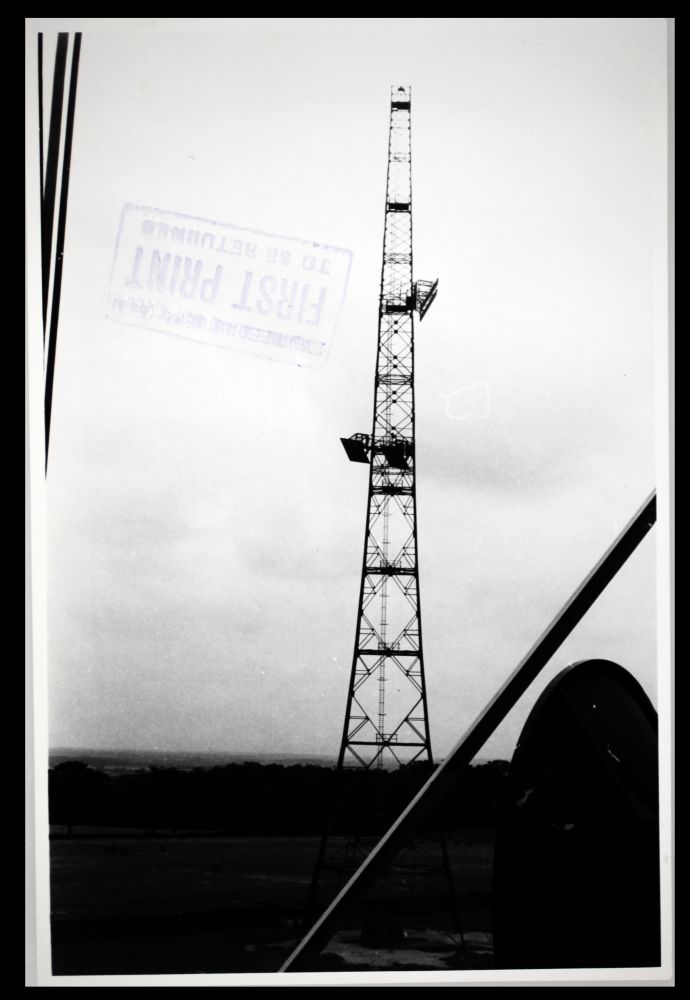
The site does not feature on the 1956 "Backbone" map, however a station at "Norwich (Bawburgh)" is shown connected to another, unnamed, as part of "Standby" routes from Kelvedon Hatch and "Grantham". Stoke Holy Cross, however, is shown on the 1959 Network map with an "Existing or Under Construction" link to Mendlesham. This was a link for Anglia Television, outward from London to the Norwich studios, with a return path as far as the Mendlesham transmitter and operated in the 2 GHz band. Anglia first broadcast on 27 October 1959. A return link from Norwich to London was not provided until some years later. The nearby BBC transmitter at Tacolneston was not fed via Stoke Holy Cross at this stage but by a temporary link from Depden. The Post Office Engineer in Chief's Annual Report for the year ended March 1960 reports on the link and notes it was the first to use a "passive reflector" - see photos below for explanation - and that temporary accommodation was required. The reflector was mounted on "Tower 1".
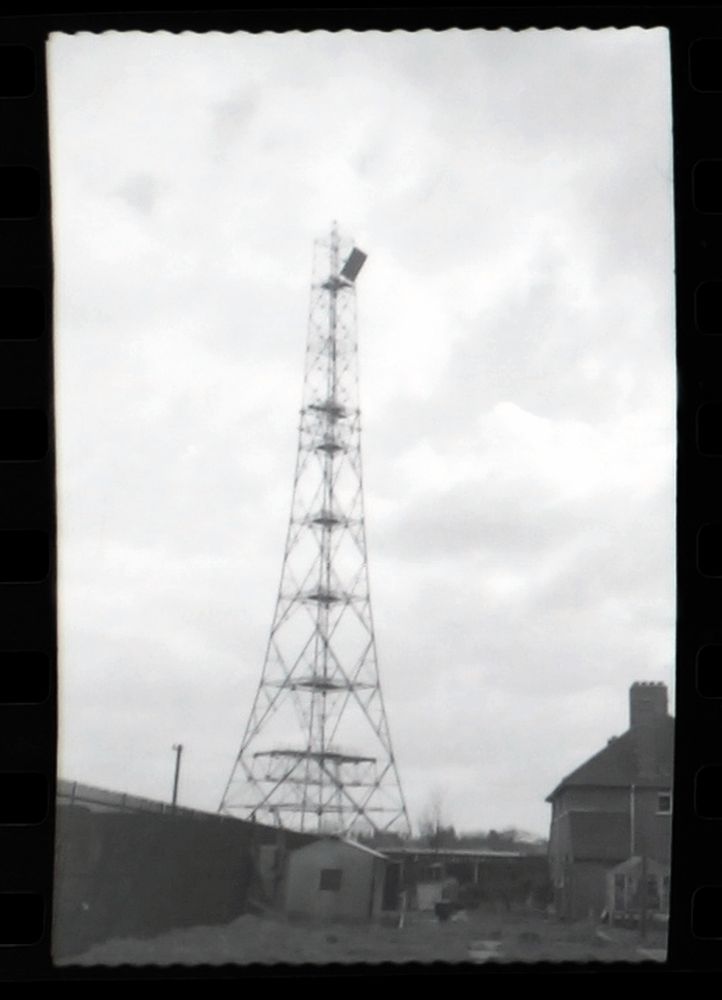
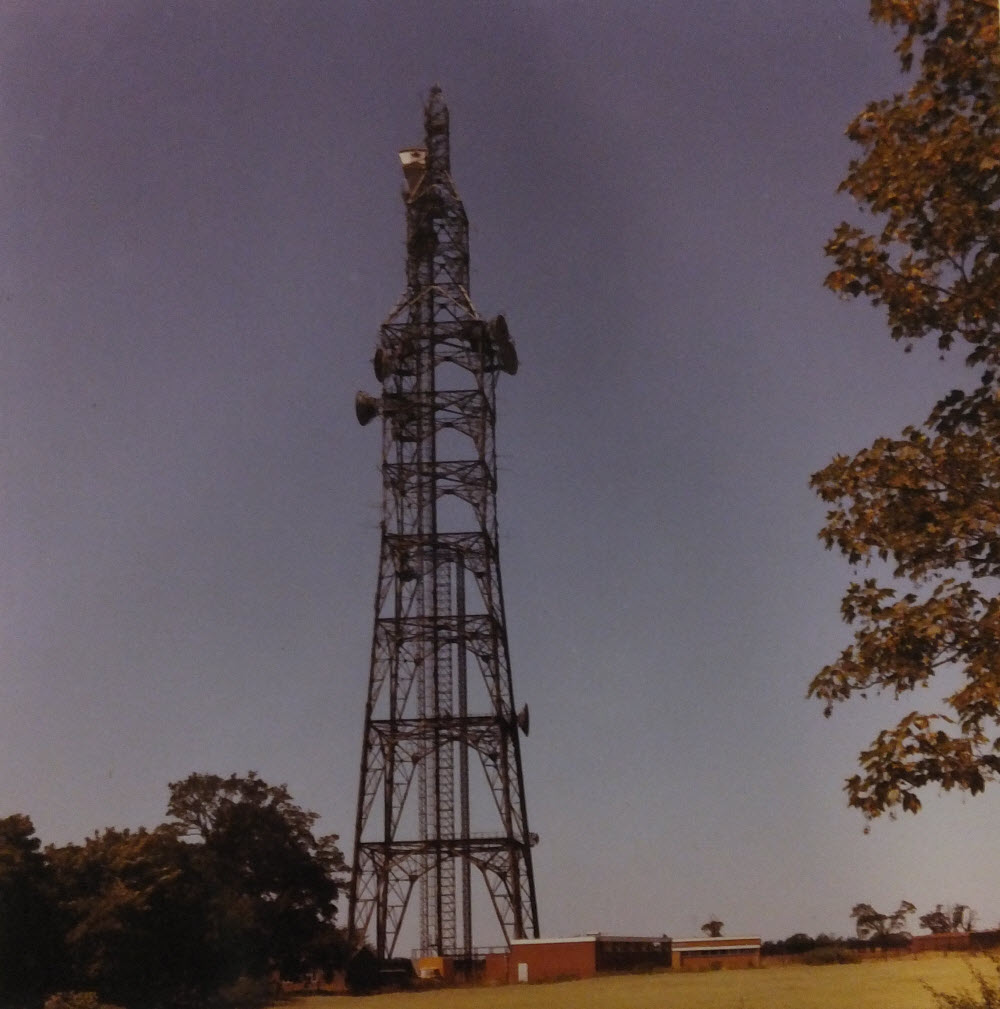
A new structure for the Post Office was under construction by 1965 - a tall version of the "standard tower" design with a "step" for horn antennas close to the top. Around the same time the development of the Linesman/Mediator radar system required links from Neatishead to Staxton Wold and West Drayton. It seems the immediate need was met through further temporary measures with passive reflectors added to "Tower 4".
Although appearing to be at the junction of two routes, Stoke Holy Cross was in reality a terminal station for the Norwich area - traffic arrived from Swaffham or Mendlesham but was not normally passed between the two routes. Both routes were developed initially for television purposes with the BBC feed for the Tacolneston transmitter originating in Birmingham. The final arrangement arrived via Swaffham as part of a general-purpose route between Birmingham and Norwich. The route from Birmingham was initially equipped with a single horn antenna, all other routes used dishes.
To allow flexibility a small Television Network Switching Centre (TVNSC) was established at the Repeater Station in central Norwich. Under normal conditions this connected the incoming feeds from Birmingham (BBC) and London (ITV) with their respective studios and then back to the transmitters. Connections between the TVNSC and studios and with Stoke Holy Cross were by cable (as was the feed to the Tacolneston transmitter). Although circuits could be provided where required, we understand there was no regular use of the London route by the BBC or Birmingham route by ITV.
The radar link serving Neatishead is likely to have ceased during the mid-1980s when the Linesman/Mediator system was replaced. In the same era BT started to migrate analogue telephony links to digital systems at 11 GHz. The BBC transferred its links to another provider in 1995. The 2006 photo below shows three large dishes facing Swaffham, suggesting digital links were operated over the route towards Birmingham. There is little evidence of digital systems being used on the London route.