History
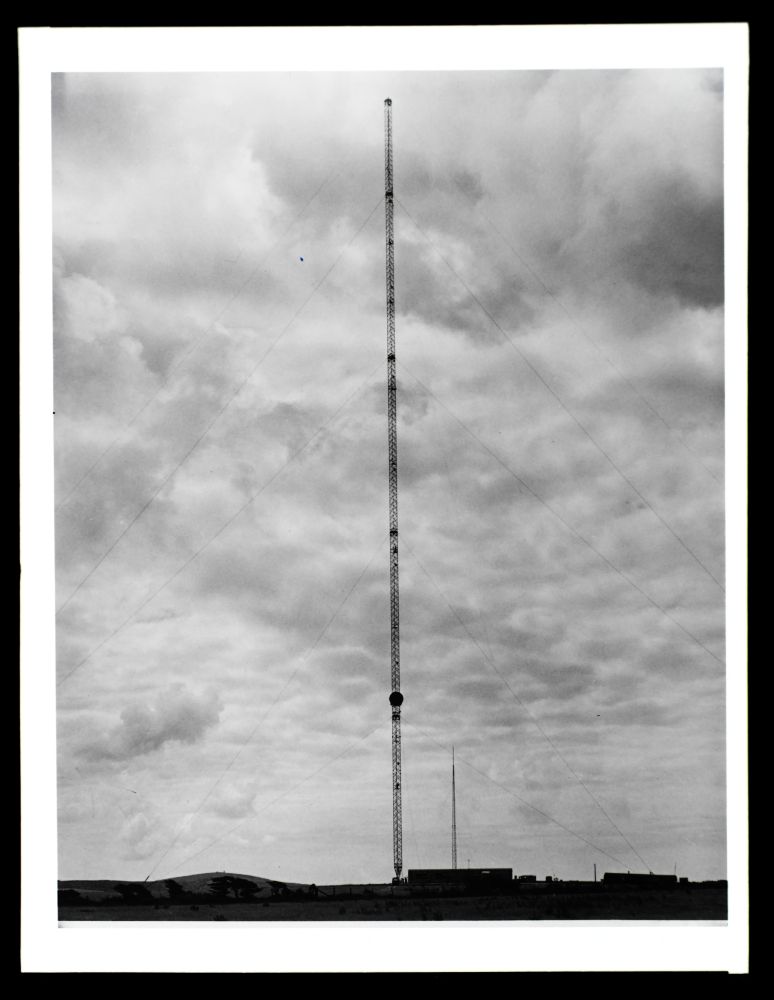
Chillerton Down did not form part of the main Post Office microwave network but features on the 1959 Network map as an "existing" site linked to Southampton. This was to provide a feed for the Southern Television transmitter which entered service in August 1958. The "network" programme was sent from London (Museum) to Rowridge, via Golden Pot, as for the earlier BBC television link. The "vision circuit" continued via cable to Chillerton Down and via 2 GHz link to the main exchange at Southampton. Further cabling completed the link to the "Plaza" studios where local programming and advertisments were added and the studio output sent back to the transmitter.
When Southern's other main transmitter at Dover entered service in 1960 a second channel was added to the 2 GHz link and connected via cable to Rowridge, reaching dover via an existing trunk cable from London. This allowed Chillerton Down and Dover to transmit different programmes where required.
Rowridge was retained and developed as a Post Office SHF site alongside the introduction of UHF 625-line television and re-arrangements to the distribution network in the Southampton area. The cable was to provide the feed for the ITV VHF transmitter with conversion to the 405-line standard assumed to be on-site at Chillerton Down. VHF televsion ceased in January 1985.
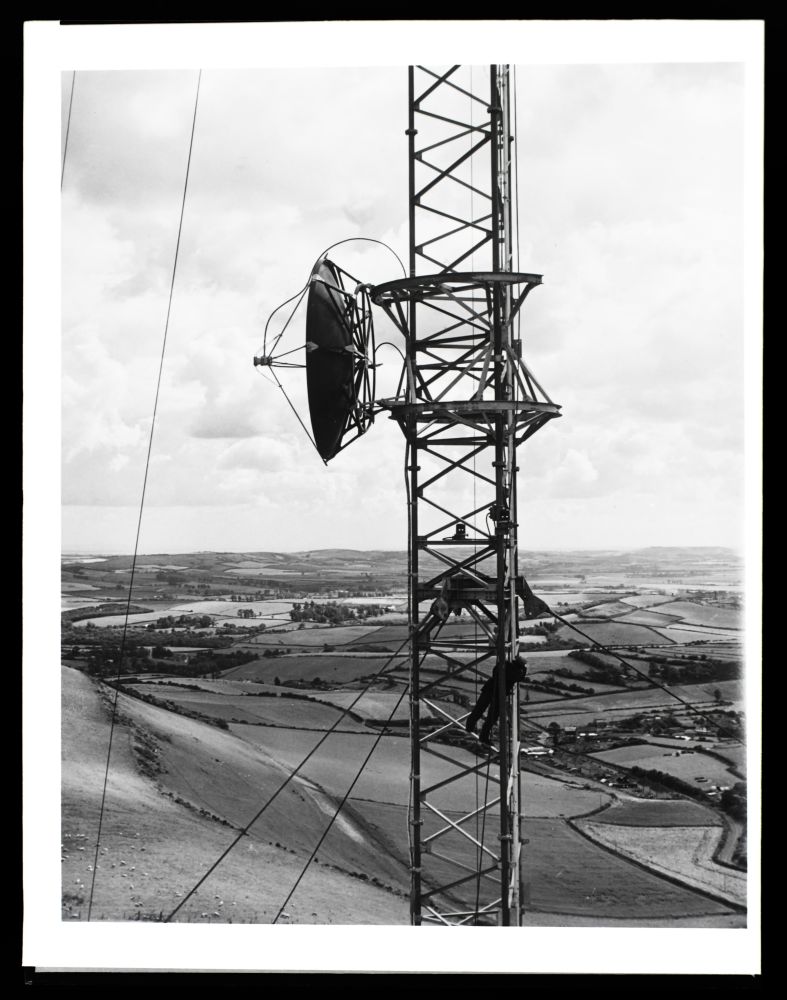
The 750 ft mast at Chillerton Down was, however, used by the Post Office/British Telecom during the 1980s, providing a telephony link to the Channel Islands. Two dishes were installed at the top, working to an existing site at Alderney. Graeme Marett, author of Connecting Jersey has provided the following background:
"The IOW project was started because of an unprecedented failure of all submarine cables to the UK from the Channel Islands, not once or twice but three times in a short period of time in the late 70s and early 80s. The resulting disruption to the local finance industry was so great that it was decided to create a back-up route via microwave. The existing inter-island link was increased in size and studies were undertaken on the feasibility of an Alderney - IOW link. Both Guernsey and Jersey telecom departments were involved and the costs shared with the PO under the agreement signed at the time of the local States departments purchase of Post Office equipment on the islands in 1971.
Work on this system started by Post Office Telecoms using "stock" equipment at the end of 1980 and it was commissioned at the end of 1981. It had both space and frequency diversity systems built in to make it more robust. It was a 960 channel system that used diversity switching since it was over a considerable distance. The quality of the link was indifferent since it was subject to the vagaries of the weather and was likely to be unusable altogether at spring tides since it was barely line-of-sight. However, it carried analogue circuits and thus was able to sustain a level of service albeit of poor quality.
As far as I am aware it was only used once in earnest (around 1983/4) and never carried any permanent traffic. It was later abandoned when more capacity was available on the CI - France link and the sinking of the first fibre submarine cable which was given more protection against dragging anchors in the Channel."