History
In common with Fairseat, Harrow Weald and Kelvedon Hatch, Bagshot served as the "first hop" from London along a route which was planned in 1950s but only completed in the mid-to-late 1960s once the "new" Post Office Tower was operational. Bagshot differs from the other three as the route from London immediately splits, continuing towards Bristol (via Stokenchurch) and Southampton (via Buster Hill). This was not the original concept.
A 1959 network map shows a direct link between London (Museum) and Stokenchurch as "programmed" and includes the other three "first hop" sites - but Bagshot is not shown. By this stage, routes to Birmingham (via Harrow Weald) and Norwich (via Kelvedon Hatch but shown as "Ongar") were already operational using a tower on the roof of "Museum" exchange in central London. The London to Isle of Wight television link via Golden Pot had also entered service. Correspondence between the ITA and Post Office indicates this was not entirely satisfactory and the 1959 map includes a "planned (sites not determined)" route between London and Southampton. This is shown as running west, then south, then west again and essentially matches the Bagshot/Butser Hill/Thornhill route.
It seems the parameters for the horn antenna required a separation of approximately 90 degrees between routes and this (or a desire to reduce the number of antennas) resulted in a revised plan with the Bristol and Southampton routes having a common section to Bagshot. Delays with completion of Bagshot then required use of a temporary link directly from London to Stokenchurch (to access the Bristol route) and between Stokenchurch and Butser Hill for the launch of BBC2 from Rowridge in 1966.
An in the Post Office Electrical Engineer's Journal, October 1967, discussing the use of horn antennas, comments: "In 1960 it was decided to introduce...horn aerials capable of carying more than one band of microwave frequencies. [...] the first fully-loaded route, operating in the 4 and 6 GHz bands, is being taken into service between the Post Office Tower, London, and Bagshot radio stations, carrying the London-Bristol and London-Southampton microwave systems". The POEEJ text may have been aspirational - the vision circuits needed for the launch of UHF 625-line television at the Rowridge transmitter were not available until late 1969.
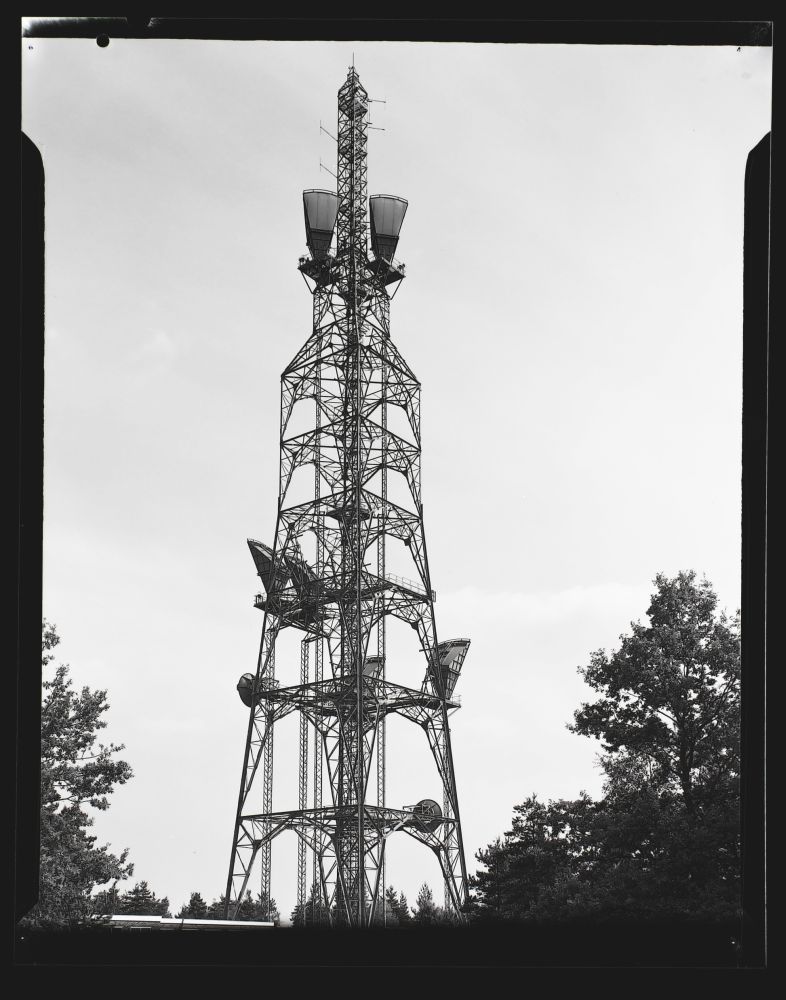
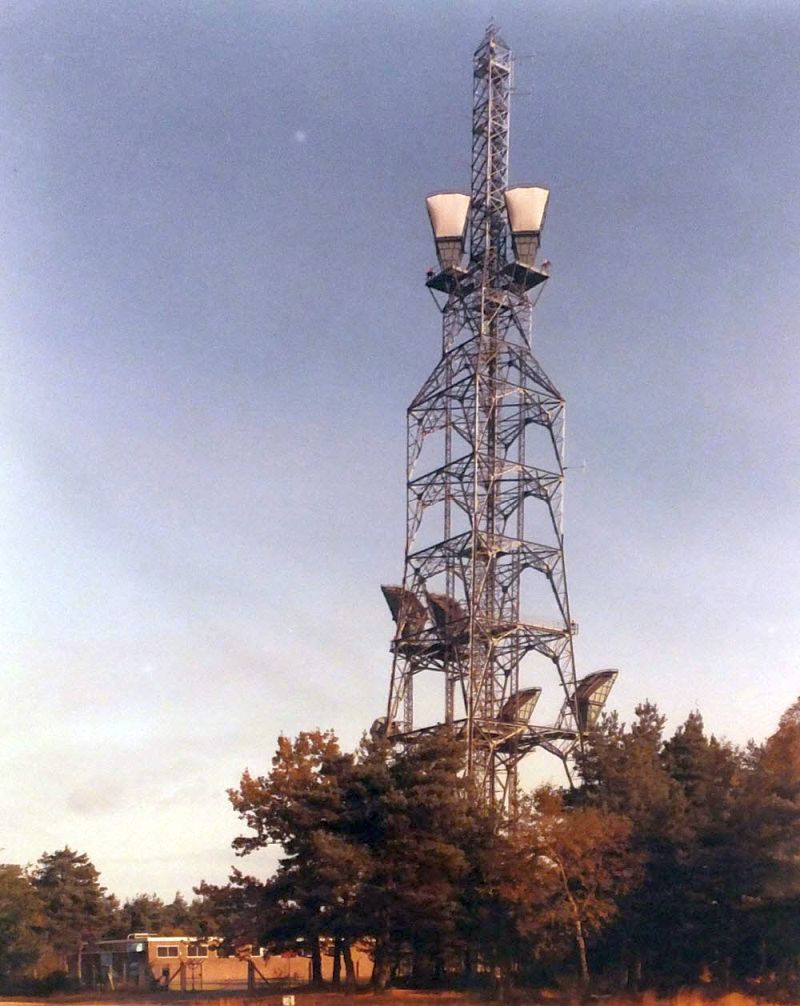
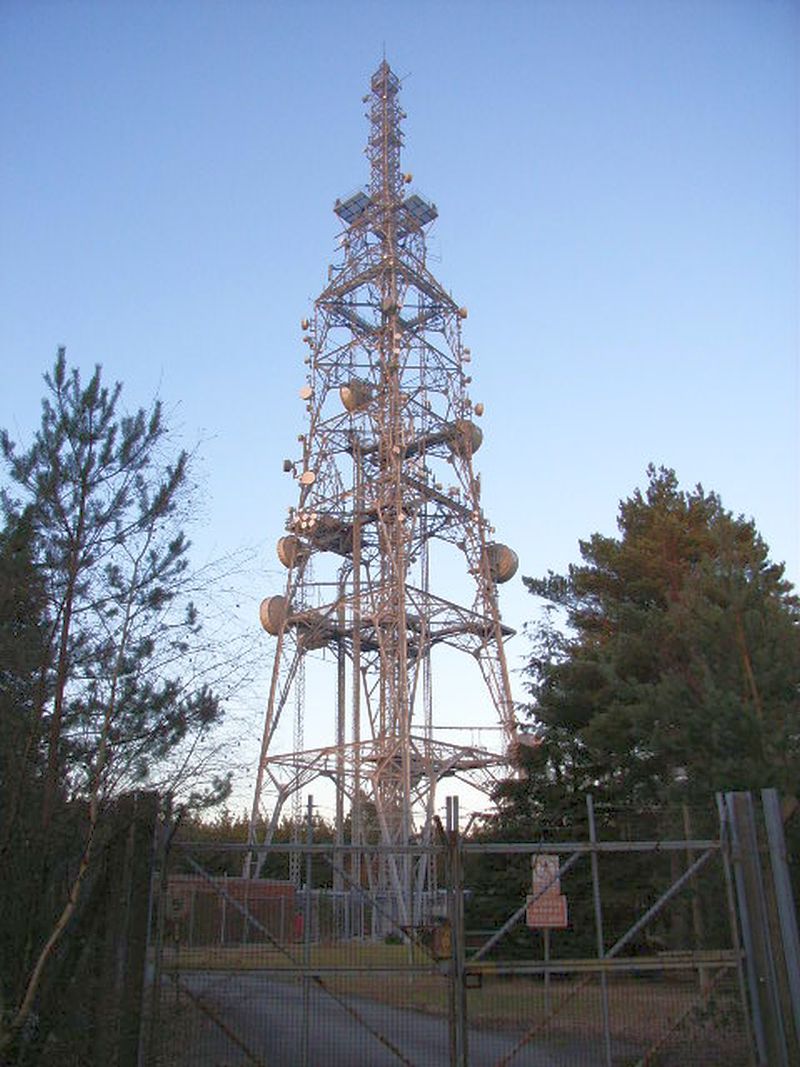
At Bagshot pairs of "large" horns were used. Despite their intended use on both bands, they were soon joined by dishes facing London and Stokenchurch to add additional capacity on the route towards Bristol. Detail of the traffic growth over the two routes is unknown but it appears digital links in the final years were provided only for the Bristol route. Unfortunately the shared section between London and Bagshot created a bottleneck since any channels allocated to one route could not been used on the other - and it's likely priority was given to the Bristol route.